A verified Google Business Profile, a website Google can read on a phone, and genuine reviews. What each one does, why Pakistani businesses stay invisible, and the order to fix it in.
- Updated 6 September 2026
- Google Business Profile
- Local SEO
- AI Search

For most Pakistani businesses, three things make the biggest practical difference in Google visibility: a verified Google Business Profile with the right category and map pin, a website that works properly on a phone, and genuine reviews from real customers. Your profile helps you appear in Google Maps and local results. Your website gives you a chance to appear in the normal search results and gives Google useful information about your business when it generates AI answers. For many businesses that struggle to appear locally, the profile is the first thing to check.
That is the practical starting point. Below, we look at how each part works, what tends to matter in Pakistan, and what to fix first when your time and budget are limited.
What "found on Google" actually means
Google visibility is split across several areas, and each one works differently.
This matters because businesses are often promised the opposite. Google says there is no way to request or pay for a better local ranking. So anyone promising a guaranteed first place in Maps is making a promise Google itself does not support.
Why Pakistani businesses struggle to appear
The same problems turn up again and again, whether the business is in Lahore, Karachi, Islamabad or a smaller city.
- No verified profile. A listing may exist because a customer added it, or because Google generated it from other data, but nobody has claimed it. Unverified listings carry less weight and give you no control over what customers see.
- The pin is in the wrong place. Pakistani addresses are landmark-based rather than street-numbered. "Shop 12, Al-Hafeez Plaza, near Firdous Market" is perfectly clear to a person and close to meaningless to a mapping system. If the pin sits on the wrong side of the road or two blocks away, distance works against you in every nearby search.
- Wrong or vague category. A business listed as "Shop" instead of "Mobile phone repair shop" will not surface for the searches that matter.
- A Facebook page instead of a website. Social pages rarely compete in organic Google results for commercial searches, and they cannot be used the way a website can.
- Competing for the wrong searches. A tailoring business in Sialkot trying to rank for "best tailor in Pakistan" is competing nationally when its actual customers are searching locally.
- A site Google cannot read properly. Heavy image sliders, text baked into graphics, no proper page titles, no indexable service pages.
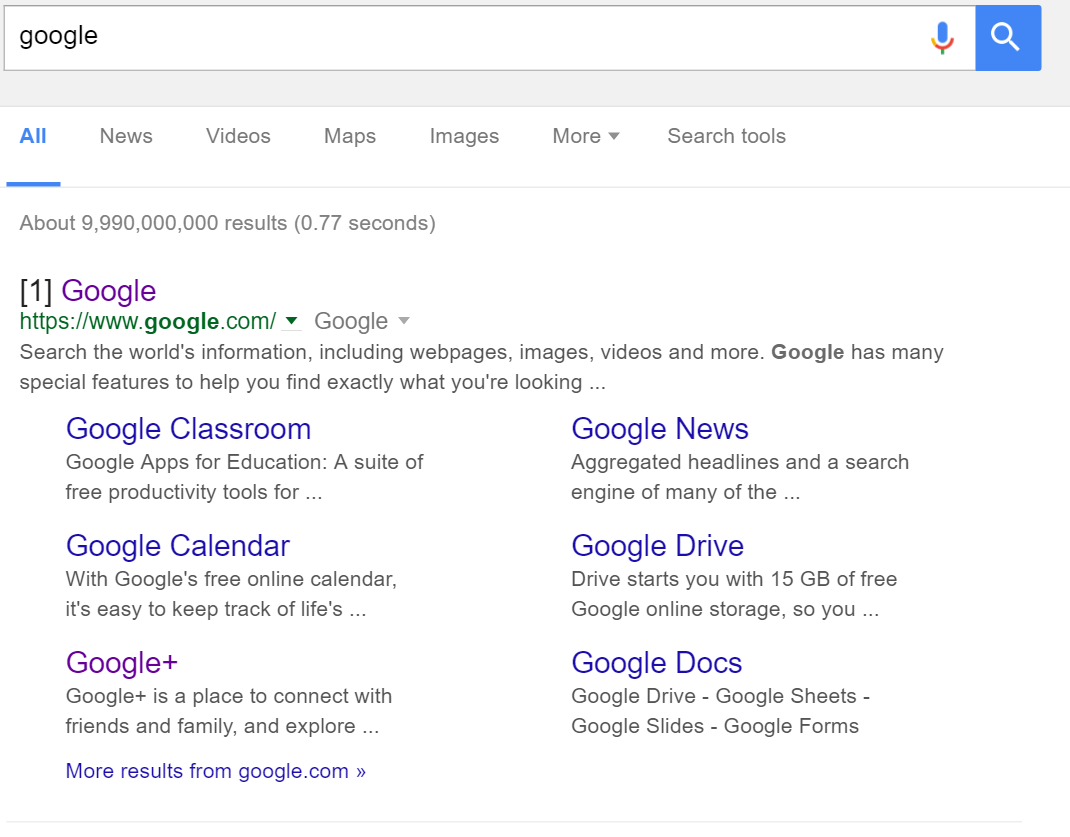
Google Business Profile: the highest-return work you can do
If you only have time for one task, start here. Creating and managing a Business Profile is free, and for a shop, clinic, restaurant, salon, workshop or other local service business, it can be one of the quickest ways to improve how easily nearby customers find you.
Verification
Google requires verification to confirm you are authorised to represent the business. Availability of methods depends on business type, region and account history, and industry reporting through 2026 indicates video verification has become the most common route for new listings, with a recorded walkthrough or a live call.
Practical preparation for Pakistani premises: make sure your signboard is visible and readable, keep a utility bill or business registration to hand, and be ready to record a continuous clip showing the sign, the entrance, the interior, and you doing something only the operator could do, such as opening the till or accessing the back office. Do not edit or pause the recording. If your business sits inside a plaza or a market, film enough of the approach that the location is identifiable, not just the door.
Two practical points that trip people up. A faded or hand-painted board that the camera cannot resolve is a common reason a video review comes back inconclusive, so it is worth getting proper signage and business printing done before you attempt verification rather than after a rejection. And if your trading name, premises documentation or partnership paperwork is not in order, that gap tends to surface here first; Legal Bridge LLP handles business registration and corporate documentation for Pakistani businesses in that position.

Category
Choose the most specific category that fits, then add secondary categories for genuine additional services. "Beauty salon" and "Hair salon" attract different searches. "Chartered accountant" and "Tax consultant" reach different audiences. It takes only a few minutes, but the choice affects which searches Google considers your business relevant to.
Complete the profile
Google says complete and accurate Business Profiles are more likely to appear in local results. Fill in the full address, opening hours including any Ramadan or holiday variations, attributes such as parking and wheelchair access, your services, and a description written for customers rather than stuffed with keywords.
There are two details Pakistani business owners often overlook.
- The phone number. Google removed chat and call history from Business Profiles in July 2024, so the profile no longer carries messaging. Customers still find and contact you through Search and Maps, which means the number you list needs to be answered by a person. A WhatsApp-only line that nobody picks up as a voice call loses enquiries.
- Photos. Real photographs of the actual premises, staff and work, taken on a decent phone in daylight, do more than stock images. Customers use them to decide whether a place looks legitimate before travelling across town.
If you built a free site through Google years ago, those Business Profile websites on business.site domains were switched off in March 2024 and the links now go nowhere. If your profile still points at one, replace it.
Search and Maps are two different competitions
Knowing the difference matters because it tells you where your effort is likely to pay off.
In Maps, distance carries real weight. A customer in Johar Town searching "car AC repair" will mostly see workshops in Johar Town. You cannot out-optimise geography. What you can control is relevance and prominence: an accurate category, complete information, steady reviews, and mentions of your business elsewhere on the web.
In organic search, distance matters far less. A page titled "Car AC repair in Lahore: costs and common faults" can rank across the city and beyond, whoever wrote it. This is where a website earns its keep, and it is why service businesses covering several areas need pages, not just a pin.
The profile wins customers who already know what they want and are nearby. The website wins customers who are still working out what they need, comparing prices, or searching from further away.
Local SEO beyond the profile
- Keep your name, address and phone number identical everywhere. Your website footer, your profile, your Facebook page, any directory listing. Inconsistent details make it harder for Google to connect the mentions to one business.
- Get listed where Pakistani businesses are actually listed. Local chambers of commerce, trade association directories, industry portals, supplier or university pages, and press coverage if you can earn it. Google counts links and mentions from other sites as part of prominence.
- Write for how people here actually search. Real queries mix English, Roman Urdu and area names: "sasta laptop repair Lahore", "wedding photography Lahore price", "AC service Johar Town", "electrician DHA Phase 5". Use the words customers use, including neighbourhood names, plaza names and landmarks, in your page titles and body text. Google added Urdu support to its AI summaries in May 2025, so Urdu-language queries are increasingly getting AI-generated answers too.
- Create one page per area you genuinely serve. Not fifty thin pages naming every town in Punjab. If you actually work in Lahore, Kasur and Sheikhupura, three real pages with different content, prices and local detail will outperform one page listing thirty cities.
Your website: what it does that a Business Profile cannot
Your Business Profile presents the information Google holds about your business. Your website gives you much more control over the information Google can crawl and understand.
On your site, you can explain services in detail, publish prices, show previous work and answer questions that people search before they contact you. You can also target searches that are not tied to a map location. A Facebook page does not give you the same control.
The on-page basics
- One page per service. A page called "Services" listing eight things ranks for none of them. Eight pages, each about one service, can each rank.
- Page title. The clickable headline in search results. Put the service and the city in it: "Interior Design Services in Islamabad | Company Name".
- One clear H1 per page that matches what the page is about.
- Meta description. Google may rewrite it, but a clear one improves click-through.
- Contact details visible on every page, with a clickable phone number.
- Structured data. LocalBusiness markup helps Google read your address, hours and contact details reliably. Most WordPress SEO plugins add it without coding.
- Set up Google Search Console and submit your sitemap. It is free, and it is the only place you see how Google actually sees your site.
Speed and mobile
For many small businesses, a large share of search visitors will arrive on a phone. Pakistan had roughly 117 million internet users at the end of 2025, on around 194 million cellular connections. Jazz and Zong launched commercial 5G in March 2026 after the PTA's spectrum auction raised about $510 million, but that rollout started in a limited set of cities and most users are still on 4G, on mid-range Android phones.
That is the environment your website needs to handle well. Google measures three real-user metrics at the 75th percentile of real visits, so it is the experience of your slower visitors that counts, not your own on office wifi.
| What it measures | Metric | Target |
|---|---|---|
| How quickly the main content appears | Largest Contentful Paint | Under 2.5 seconds |
| How quickly the page responds to taps | Interaction to Next Paint | Under 200 milliseconds |
| How much the layout jumps while loading | Cumulative Layout Shift | Score under 0.1 |
On small-business websites, a few problems appear frequently: large image sliders, phone photographs that have never been compressed, too many chat or pop-up scripts, and slow shared hosting. These are sensible places to start before making more complicated changes. If the site is beyond patching, Tralionex website development rebuilds on foundations that can actually rank.
Reviews and trust
Reviews influence local ranking and they influence whether anyone calls you. Google says more reviews and positive ratings can help local ranking, and that replying to reviews helps your business stand out.
The safe way to build them: ask every customer, consistently, right after you have done good work. Google provides a review link and QR code you can generate from your profile. Printed on a counter card, a receipt, a sticker or the back of a business card, that QR code converts far better than a link sent hours later, which is where printed cards, stickers and counter standees earn their cost.
The unsafe way, and this is common in Pakistan: offering a discount, free item, or entry into a draw for a review. Google treats incentivised reviews as fake engagement and prohibits it explicitly, including incentives offered to change or remove a negative review. Businesses found violating this can have reviews removed, be blocked from receiving new reviews for a period, have existing reviews unpublished, or have a warning shown on their profile telling customers that fake reviews were removed. That last one is far more damaging than the bad review you were trying to bury.
Asking only your satisfied customers is a policy problem too, not just a credibility one. Google's contributor policy specifically prohibits merchants from discouraging negative reviews or selectively soliciting positive ones. Ask everyone. A profile with a mix of ratings and thoughtful owner replies reads as more credible than a wall of identical five-star comments posted in the same week.
Reply to negative reviews calmly, in public, with specifics. Prospective customers read the reply more carefully than the complaint.
Content that answers what customers actually ask
Useful business content usually starts with a real customer question, not a generic topic such as "5 Tips for a Better Home". Think about what people ask before they decide to buy.
Keep a running list of the questions customers ask you each week. What does it cost? How long does it take? Do you deliver to my area? What is the difference between the cheap option and the expensive one? Do you give a warranty? What documents do I need to bring?
Then answer each one on its own page, properly, with real numbers where you can give them. A page called "How much does a website cost in Pakistan in 2026?" that gives honest price bands and explains what changes the price will earn more qualified enquiries than a dozen generic blog posts.
Some businesses hesitate to publish prices. Where you can give a realistic range, though, it can save time on unsuitable enquiries and help serious customers decide whether to contact you.
What AI search changes, and what it does not
Google merged AI Overviews and AI Mode into a single flow in May 2026, so a searcher can get a summarised answer and then keep asking follow-up questions without returning to the results. AI Mode has been available in Pakistan since Google's expansion to 180 countries in 2025, and the AI summaries support Urdu.
For a small business, the practical effect is fairly simple:
- Some informational searches will not produce a click. If someone asks what time a barber shop typically opens, they may get the answer without visiting a site. That is a real loss for thin informational content and much less of a loss for content aimed at people ready to buy.
- Being the source still matters. Answers are assembled from content that already exists on the web, so a page that states things clearly and factually has a better chance of being drawn on than one that buries the point under three paragraphs of introduction.
- You can now measure it. Google launched generative AI performance reports in Search Console in June 2026 and completed the worldwide rollout on 31 August 2026. The report shows impressions inside AI features on Search, broken down by page, country and device. It does not show clicks, click-through rate or queries, so treat it as a visibility indicator rather than a traffic number.
There is no reliable public formula for getting a business cited in an AI answer. Google does not publish one, and independent studies show the citation sets shifting frequently. Anyone selling a guaranteed "AI ranking" package is selling certainty that does not exist. Write clearly, be accurate, be the primary source for information about your own business, and check the report to see what is happening.
Organic, paid, local or national: where to compete
Organic and profile work is slow and cumulative. Nothing happens for weeks, then it compounds, and the results do not disappear when you stop paying.
Google Ads is immediate and stops the day the budget stops. It makes sense when you have a genuinely profitable transaction, you know roughly what a customer is worth to you, and you can afford to test. It also makes sense when you have just launched and have nothing else. Set a small daily budget, target one city, and use exact phrases customers actually type rather than broad terms that burn money on irrelevant clicks.
Local versus national is worth deciding honestly. If you can only serve customers who can reach you, local visibility is the whole game and national ranking is a vanity exercise. If you ship nationwide, sell software, or run an export business from Sialkot or Faisalabad, the calculation is different and your website carries most of the weight.
A 30-day plan
- Week 1 Search your business name on Google and Maps. Claim any existing listing, or create one. Start verification. Fix the pin by dragging it to the exact entrance. Set the correct primary category.
- Week 2 Complete the profile: hours, services, description, attributes, and fifteen to twenty real photographs. Check the phone number is answered. Ask ten recent customers for reviews using your Google review link. If you have no website, register a domain and get a basic five-page site up.
- Week 3 Build or fix the core website pages: home, one page per main service, an about page with real photographs and names, and a contact page with your full address and a map. Put the same name, address and phone number in the footer. Connect Google Search Console and submit the sitemap.
- Week 4 Publish two pages answering your most common customer questions, including one about pricing. Compress every image. Test the site on a mid-range phone on mobile data, not wifi. Get listed in two or three relevant Pakistani directories or associations.
- Then, monthly Ask for reviews continuously. Reply to all of them. Add one useful page a month. Check Search Console for what people are actually finding you for, and write about the gaps.
Mistakes worth avoiding
- Keyword stuffing your business name. "Best Cheap AC Repair Lahore Shop" as a business name violates Google's guidelines and risks suspension. Use your actual registered trading name, and if the registered name and the name on your board do not match, sort that out before it becomes a suspension appeal.
- Multiple listings for one location. Duplicates split your reviews and confuse Google. Merge or remove them.
- Buying reviews or links. Both are detectable and both carry real consequences.
- Changing the business name, address or category repeatedly. Instability triggers re-verification and can suspend a profile.
- Treating the profile as a one-time setup. Hours that are wrong during Ramadan or Eid generate bad reviews from customers who arrive at a closed shop.
- Ignoring Search Console for months. It tells you which pages Google cannot index and which searches you are already close to winning.
- Chasing rankings instead of enquiries. Position three for a search nobody makes is worth nothing. Ten calls a week from position seven is a business.
When professional help makes sense
Most of what is above is work you can do yourself. The profile setup, the review process, the pin, the categories, the customer question pages: none of it requires a specialist, only attention.
It is worth paying for help in a few specific situations. When your profile has been suspended and appeals keep failing. When you have inherited a site built badly enough that fixing it costs more than rebuilding. When your work is genuinely technical, such as an e-commerce catalogue with thousands of products, multi-city service pages, or a site that has to load fast on weak connections. When you are competing in a market like property, private healthcare or legal services in a major city, where the businesses ahead of you are already spending seriously. And when the honest constraint is time, because a plan you never execute is worth less than a mediocre one somebody actually delivers.
If you do hire someone, ask two questions before you pay. What exactly will exist at the end of month one that does not exist now? And how will we measure whether this worked, in enquiries rather than rankings? Anyone who cannot answer both is not worth the retainer. Tralionex works with Pakistani businesses on websites, SEO and local visibility, and the same test applies to us as to anyone else.
Start with the profile: verify it, correct the pin, choose the right category and build a consistent review process. Those are practical improvements you can make before spending money on more advanced SEO work.
- Tralionex SEO ServicesLocal SEO, Google Business Profile work and search visibility for Pakistani businesses.
- Tralionex Website DevelopmentFast, indexable websites built to work on mid-range phones and 4G.
- Click2PrintSignage, business cards, review QR standees, stickers and commercial printing in Lahore.
- Legal Bridge LLPBusiness registration, corporate compliance and regulatory support in Pakistan.
- TralionexDigital services, branding, technology and project execution.
- Tralionex InsightsPractical guides on SEO, websites, branding and business growth.
Frequently asked questions
Is a Google Business Profile free in Pakistan?
Yes. Creating, verifying and managing a Google Business Profile costs nothing. Google also states there is no way to pay for a better local ranking.
Do I need a website if I already have a Google Business Profile?
Not to appear in Google Maps. You do need one to appear in the normal search results, to publish prices and answers to customer questions, and to be a source Google can draw on when writing AI answers. The free Business Profile websites on business.site domains were shut down in March 2024.
How long does it take to rank on Google in Pakistan?
A verified, complete Business Profile can start appearing in local results within days to weeks. Organic rankings for competitive commercial searches usually take several months of consistent work. Nobody can promise a specific position or date.
Can I offer customers a discount for leaving a Google review?
No. Google prohibits incentivised reviews as fake engagement, and also prohibits merchants from discouraging negative reviews or selectively asking only happy customers. Businesses found doing it risk having reviews removed, losing the ability to receive new reviews, or having a public warning shown on their profile.
Does AI search mean SEO no longer matters for small businesses?
No, but the mix changes. Thin informational content loses clicks to AI summaries, while searches by people ready to buy still lead to calls and visits. Google's generative AI report in Search Console, rolled out worldwide on 31 August 2026, lets you see how often your pages appear in AI features.
- Google: Improve your local ranking on Google
- Google Maps: Prohibited and restricted content
- Google: Business Profile restrictions for policy violations
- Google: Reviews on your Business Profile, best practices
- Google Search Central: generative AI performance reports in Search Console, June 2026, worldwide rollout completed 31 August 2026
- Pakistan Telecommunication Authority: 2026 spectrum auction results
- DataReportal: Digital 2026 Pakistan
Note on accuracy. This guide reflects Google's published documentation and Pakistan market conditions as understood on 6 September 2026. Google changes its products and policies regularly, and verification methods, reporting features and ranking behaviour may differ by business type and region. No agency, including Tralionex, can guarantee a specific Google position, a Maps placement or inclusion in an AI-generated answer.


No comments:
Post a Comment